Saturday, 17 December 2016

Ode to Nightingale - John Keats


Ode to Nightingale

https://yeshab68.blogspot.in/2016/12/john-keats-selected-odes.html 

                                                   (Click on the images for more poems)


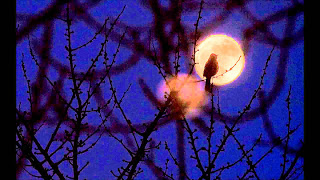
       Ode to Nightingale is poem with eight stanzas. It is a kind of a process of a poet from reality to dream and dream to imagination and then again he comes into reality. Keats has not remembered whether the encounter of his with nightingale was dream or reality but he felt the beauty of music and fantasy.

My heart aches, and a drowsy numbness pains
My sense, as though of hemlock I had drunk,
Or emptied some dull opiate to the drains
One minute past, and Lethe-wards had sunk:
'Tis not through envy of thy happy lot,
But being too happy in thine happiness,—
That thou, light-winged Dryad of the trees
In some melodious plot
Of beechen green, and shadows numberless,
Singest of summer in full-throated ease.

      The first stanza starts with the extreme pain of the heart of the poet. The heart of poet has pain and numbness and his senses are not supporting him. The senses of poet are out of his control because he is drunk. He has written this poem in painful period of his life as he says in the stanza that it is like “being too happy in thin happiness”.  When he hears the song, his pain is connected with the melodious sound of nightingale.

O, for a draught of vintage! that hath been
Cool'd a long age in the deep-delved earth,
Tasting of Flora and the country green,
Dance, and Provençal song, and sunburnt mirth!
O for a beaker full of the warm South,
Full of the true, the blushful Hippocrene,
With beaded bubbles winking at the brim,
And purple-stained mouth;
That I might drink, and leave the world unseen,
And with thee fade away into the forest dim:

        In this stanza poet seems very disappointed and wants to leave this world which has given him an extreme pain. After hearing the song of nightingale he wants to drink a lot and in the stage of unconsciousness he will fade away in forest with the bird. He wants to escape from this world.

Fade far away, dissolve, and quite forget
What thou among the leaves hast never known,
The weariness, the fever, and the fret
Here, where men sit and hear each other groan;
Where palsy shakes a few, sad, last gray hairs,
Where youth grows pale, and spectre-thin, and dies;
Where but to think is to be full of sorrow
And leaden-eyed despairs,
Where Beauty cannot keep her lustrous eyes,
Or new Love pine at them beyond to-morrow.

      In this stanza he expresses the world and its miseries. The youth suffers in this world that youth leads towards paleness and then dies, as Keats himself was dying. In this world he does not want to live where love has no faith and it changes day by day from one to another.

Away! away! for I will fly to thee,
Not charioted by Bacchus and his pards,
But on the viewless wings of Poesy,
Though the dull brain perplexes and retards:
Already with thee! tender is the night,
And haply the Queen-Moon is on her throne,
Cluster'd around by all her starry Fays;
But here there is no light,
Save what from heaven is with the breezes blown
Through verdurous glooms and winding mossy ways.

      Poet first wants to escape from this world by the help of wine but now he says that his power of imagination is enough for him to leave this world of harsh reality. He wants to fly on the chariot of his reality. He wants to live with birds in his dream.

I cannot see what flowers are at my feet,
Nor what soft incense hangs upon the boughs,
But, in embalmed darkness, guess each sweet
Wherewith the seasonable month endows
The grass, the thicket, and the fruit-tree wild;
White hawthorn, and the pastoral eglantine;
Fast fading violets cover'd up in leaves;
And mid-May's eldest child,
The coming musk-rose, full of dewy wine,
The murmurous haunt of flies on summer eves.

         In his imagination he felt the fragrance of beautiful flowers. In the world of his imagination he saw that near the place where he has seated, there are lots of flowers which rarely grow on the mountains. He saw hawthorn and the pastoral eglantine. He has smelled all the fragrances in his dreams. He was not able to see the flowers by smelling it he also saw the colours of the flowers.

Darkling I listen; and, for many a time
I have been half in love with easeful Death,
Call'd him soft names in many a mused rhyme,
To take into the air my quiet breath;
Now more than ever seems it rich to die,
To cease upon the midnight with no pain,
While thou art pouring forth thy soul abroad
In such an ecstasy!
Still wouldst thou sing, and I have ears in vain—
To thy high requiem become a sod.

           In this stanza poet describes the concept of salvation and physical death. He says that if he dies by listening this song it will be the death of ease.  He will be released from all the pains of the world. His breath is connected with the song of bird and he is in love with this easeful death. He compares death with ecstasy.

Thou wast not born for death, immortal Bird!
No hungry generations tread thee down;
The voice I hear this passing night was heard
In ancient days by emperor and clown:
Perhaps the self-same song that found a path
Through the sad heart of Ruth, when, sick for home,
She stood in tears amid the alien corn;
The same that oft-times hath
Charm'd magic casements, opening on the foam
Of perilous seas, in faery lands forlorn.

        In this stanza the bird talks about the immortality of bird and its song. He says that the bird will die after some years, but its song will remain in the sense of all for many years and alo in this nature and trees. The song will remain alive as nightingale. He says the soul will left the body but the memory and senses will be there forever. He projects the tragedy of human life and how the world is surrounded by the concept of death.

Forlorn! the very word is like a bell
To toll me back from thee to my sole self!
Adieu! the fancy cannot cheat so well
As she is fam'd to do, deceiving elf.
Adieu! adieu! thy plaintive anthem fades
Past the near meadows, over the still stream,
Up the hill-side; and now 'tis buried deep
In the next valley-glades:
Was it a vision, or a waking dream?
Fled is that music:—Do I wake or sleep?

            The word “Forlorn” rings like the bell and breaks the imagination of the poet. The poet is back from the world of imagination and from the company of bird and now he is with himself. The poet is not able to decide whether it was a dream or his real vision? He is confused but also satisfied.
Ode to autumn - John Keats


Ode to autumn

https://yeshab68.blogspot.in/2016/12/john-keats-selected-odes.html
(Click on the image for more poems)

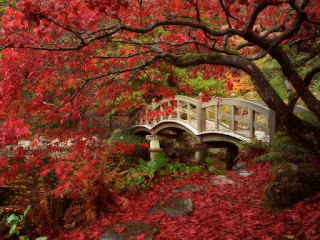
      Ode to autumn is written by Keats when he felt the beauty of autumn. He saw the fields with golden plants and grains and farmers happiness. He put the elements of nature as the important part of the autumn. He personified creatures as farmers.

Season of mists and mellow fruitfulness,
Close bosom-friend of the maturing sun;
Conspiring with him how to load and bless
With fruit the vines that round the thatch-eves run;
To bend with apples the moss'd cottage-trees,
And fill all fruit with ripeness to the core;
To swell the gourd, and plump the hazel shells
With a sweet kernel; to set budding more,
And still more, later flowers for the bees,
Until they think warm days will never cease,
For summer has o'er-brimm'd their clammy cells.

        In the first stanza, poet describes the beauty of autumn. Poet calls the season of autumn as the season of mellow fruitfulness and the friend of maturing sun. The season is of fruitfulness because trees get fruits in this season and flowers get blossomed. The sun is not only sun but mature sun because it gives life to the vegetation world by its light. By the conspiring of autumn and sun we get the most delicious fruits of the season. Further he saw that the branches of apple trees are bend with the weight of big ripen apples. He further imagines that when nuts will fall down from the trees they will become seed and will become plant in another spring.

Who hath not seen thee oft amid thy store?
Sometimes whoever seeks abroad may find
Thee sitting careless on a granary floor,
Thy hair soft-lifted by the winnowing wind;
Or on a half-reap'd furrow sound asleep,
Drows'd with the fume of poppies, while thy hook
Spares the next swath and all its twined flowers:
And sometimes like a gleaner thou dost keep
Steady thy laden head across a brook;
Or by a cyder-press, with patient look,
Thou watchest the last oozings hours by hours.


               In the second stanza, Keats starts personification again as he asks the question in the very first line of these stanza. He asks about the store of autumn and its detail. Then he went on finding the autumn and the best place he suggests is the countryside and the ‘granary’ where the harvested grains are kept. Here the word ‘abroad’ is not about foreign country but a country side.


Where are the songs of spring? Ay, Where are they?
Think not of them, thou hast thy music too,—
While barred clouds bloom the soft-dying day,
And touch the stubble-plains with rosy hue;
Then in a wailful choir the small gnats mourn
Among the river sallows, borne aloft
Or sinking as the light wind lives or dies;
And full-grown lambs loud bleat from hilly bourn;
Hedge-crickets sing; and now with treble soft
The red-breast whistles from a garden-croft;
And gathering swallows twitter in the skies.

       In the third stanza, he asks that where are the songs of spring? and he repeated the question. As per him autumn has its own song and it has also its own importance in all four seasons. Poet stars describing the song of autumn by different images. Clouds are used to describe the atmosphere of autumn as it blooms in day. When the sunsets, the light of sun touches the field which have no plants now because it all has harvested. There is also the sound of gnats when the day ends. The sound of various animals completes the song of autumn.

Thursday, 15 December 2016

"ચિત્રલેખા" નાટ્યસ્પર્ધાના રંગસાધક વિદ્વાનો સાથે વાર્તાલાપ"


        Today, on 15th December I have attended a Workshop and Talk of "ચિત્રલેખા" નાટ્યસ્પર્ધાના રંગસાધક વિદ્વાનો સાથે વાર્તાલાપ" the talk was organized by Cultural committee of M. K. Bhavnagar university. This workshop was related with Drama, acting, production and Writing.


      As a student of English Literature I have studied many plays. Play is an art of performing but when we study the play as a student we have to focus upon writer’s point of view as well as audience’s point of view towards the play. In Department of English we have arranged many film screenings which are based on different plays and novels. So in attending this talk my personal interest was not as writer or actor because I am not from that field. I have attended this talk as a student of Literature.


     The talk was hosted by Prof. Digpalsinh Jadeja. He has introduced the guests and welcomed them by giving a flower bouquet.  


     Prof. Mahendrasinh Parmar has introduced the guests as the four pillar of Drama. He said, for a successful drama four things are important Writer, Direction, Actor and Producer and all four were present there. Pravin Solanki is the well known writer of the Gujarati drama. Kapildev Shukla is one of the great directors of Guajarati Drama. Amit Divetiya is the actor of drama as well as films and Lalit Shah is the producer of Gujarati dramas.


      Vice Chancellor of M. K. Bhavnagar University Dr. Shailesh Zala sir has welcomed the guests by appreciating the work of Cultural Committee of M.K. Bhavnagar University.


      The first speech was given by Kapildev Shukla sir. He has presented the aspects of directions. He is well known director and for him people used to say that, “A stone can also act in Kapildev’s direction.” As per him the main and important thing for director is to “Observe” the surroundings. He has given an example that he has observed the behaviour of our VC sir, and now if he will direct the actor for the role of VC, he would follow this body language. The second and important thing he said is “Dedication towards the work”. As per him, if the person is skilled and enough perfect though the person should not leave practicing.


      The next speech was given by Lalit Shah. He has shared his experience as a producer. As per him there is two parts of Production. First is outside the drama and theatre which contains the matters like publisher, theatre booking, licence, Publicity, and choose the writer and type of drama which can be commercial and for pleasure. The second part is in the drama. The producer has to take care of all the props needed in performance in drama. All legal matters and director’s need is fulfilled by producers.


       The third speech was given by Amit Divetiya sir. He has presented the different level of acting in contemporary Gujarati Dramas. As per him the actor should be flexible with all roles and director and script’s demand. He has shared his experience that suddenly after his father’s death he has to go for the drama performance. It is his dedication. As per him the skill of drama should be in blood of the person. It should be in the DNA of the person.


      The final speech was given by the writer Pravin Solanki. He has started his speech by giving a shock to us. He act like he is suffering with extreme pain in his heart and everybody was shocked. But suddenly he said “This is drama” this is drama is all about. As per him drama is not all about writing a script or dialogues. But it is all about presenting expressions in the paper which director feels and then actor performs with their art and audience receives.


     The thanking speech was given by Prof. Vipul Purohit.


      The session was very interesting and there was healthy communication between artists and students. All the four artists have satisfied the curiosity of students and answered them well. Overall I really enjoyed the session and as Lalit Shah sir said that he will arrange a workshop on drama with practical guidence by Artists, so waiting for next session.