Thursday, 21 July 2022

Question bank of The Romantic Period


Solved questions bank of The Romantic period:


The Romantic Age: Click here

Romantic Poets: Click here

Works of Romantic poets: Click here


Jane Austen and Walter Scott: Click here


Lord Byron: Click here

Poems by Byron: Click here other works Byronic hero


Shelley: Click here

Poems by Shelley: click here


Keats: Click here

Poems by Keats: Click here


Wordsworth: Click here Some facts

Poems by Wordsworth: Tintern Abbey Ode to Duty To the Skylark Intimations of Immortality To a Daisy

Lyrical Ballads


Coleridge: Click here

The Rime of the Ancient Mariner

The Rime of the Ancient Mariner

Lectures on Shakespeare: Click here


Charles Lamb: Click here Essays on Elia

De Quincey: Click here

Landor: Click here Some works


Thursday, 14 July 2022

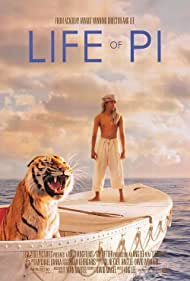
Life of Pi - Film screening


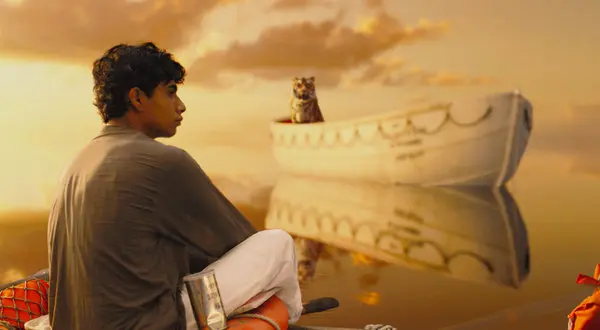
Life of Pi is a 2012 adventure-drama film directed and produced by Ang Lee and written by David Magee. Based on Yann Martel's 2001 novel of the same name, it stars Suraj Sharma, Irrfan Khan, Rafe Spall, Tabu and Adil Hussain in lead roles. The storyline revolves around two survivors of a shipwreck. One is a sixteen-year-old Indian boy named Pi Patel (Suraj Sharma) and the other is a ferocious Bengal tiger named Richard Parker that are on a lifeboat stranded in the Pacific Ocean for 227 days.

The film began development shortly after the release of the book and would see directors M. Night Shyamalan, Alfonso Cuarón and Jean-Pierre Jeunet involved at various stages before the hiring of Lee. Filming was split between India, Taiwan and Montreal in 2011, with Rhythm & Hues Studios (R&H) handling the visual effects work. The film had its worldwide premiere as the opening film of the 50th New York Film Festival at both the Walter Reade Theater and Alice Tully Hall in New York City on September 28, 2012. (Wikipedia)


Film screening of Life of pi – (Some notes)


Pre-viewing task:

  • Go through the text
  • Get some knowledge about Robinson Crusoe and Gulliver’s Travels
  • Metafiction - (a Self-consciousness literary style in which the narrator or characters are aware that they are part of a work of fiction)


While viewing task:

  • Observe the beginning scene
  • Naming of Pi and Tiger (Swimming pool, Pi, hunter, ‘Thirsty’)
  • Thirsty Pi (Curiosity regarding religion and spirituality)
  • Discussion on ‘hidden lotus’
  • Ocean as symbol (archetype – balance of life – regeneration)
  • Scenes of Pi and Richard Parker (the struggle)
  • An island (shape of a human – Day and night)
  • The goodbye scene (giving up an addiction)
  • Story within a story (Pi explains the journey to others)


Post-viewing task:

  • Share your views (movie review)
  • Which version of the story is more appealing?
  • What is the significance of ‘Tiger’?
  • What is the significance of ‘Island’?
  • What is the difference between spirituality and religion and what is the significance of doubt in it?

Wednesday, 29 June 2022

The Wretched of the Earth - Frantz Fanon


This blog contains an overview of the Frantz Fanon’s most important book The Wretched of the Earth (1961)


The Wretched of the Earth (French: Les Damnés de la Terre) is a 1961 book by the psychiatrist Frantz Fanon, in which the author provides a psychological and psychiatric analysis of the dehumanizing effects of colonization upon the individual and the nation, and discusses the broader social, cultural, and political implications of establishing a social movement for the decolonization of a person and of a people. The French-language title derives from the opening lyrics of "The Internationale". (Wikipedia)

Here I have embedded a PowerPoint presentation containing an explanation of the text.


Monday, 9 May 2022

Mrs. & Mr. Shameem - A Zee5 original


  Recently watched a Zee5 web-series Mrs. And Mr. Shameem. I got attracted by the title as well as the trailer. For the first time, I read ‘Mrs’ first and ‘Mr’ afterward, was not aware that it was taken as an irony may be.


   A Pakistani series, from the streets of Lahore, starring the megastar Saba Qamar, tells the love story of a man Shameem (Nauman Ijaz) who is ‘unfit’ in the definition of Macho man, or as society depicts ‘Mard’. Umaina (Saba) is a bold young girl, and in love with the man of her dreams, who impregnates her, and later betrays her. After facing all the hatred from society and her own family she ends up marrying his silent lover Shameem, who owns ‘Nazakat’ than the so-called ‘manly qualities’.


   I am not going to tell the story, but the discussion starts from here. The series may look a bit slow with twenty episodes, each one with 40-50 minutes but gives a voice to some great issues and breaks the stereotypes.


 1) ‘A definition of man’ and ‘Manly qualities’. For sure we can observe Shameem with the theory of Queer. As a student of literature, the first thing I found was the treatment of Shameem’s family towards him, and then society’s torture of him. The story tries to explore the real definition of man. What is more important for a man to be a man? The answer that this series gives is feelings, respect, and support towards his family and friends. A man doesn’t have to have the strength to fight and be protective all the time. It’s just about the capability to repair circumstances after the damage is done and support the family all the time.

Generally, we see elders of all the families are busy controlling the family members rather than supporting them.


2) Motherhood:   Motherhood is always seen as a boon to a woman. But the series shows that Umaina hates her infant and tries to kill him many times. This concept is applied in the story quite logically as she was suffering from postpartum depression which is also called baby blues. In this depression, a mother feels disgusted about the child and sometimes can kill the child too. This can be proved as something new to watch than the stereotypical image of a perfect mother who is always ready to sacrifice everything for the child.


The next character who falls in the category is, Shameem’s sister, she was eagerly craving to be a mother and was being criticized a lot by her husband as well as society. She passed half of her life in regret that she is unable to produce a child and also got involved with black magic but, later she came to know that the fault was in her husband. She broke the shackles of society and started hoping for a better life with Shameem and Umaina’s child Ali. Later on, her husband joined the hijra community and never returned to her. This can be a dramatic end, but the issue that the series raise is that women are still being judged if she doesn’t provide a child within two-three years of their marriage.


3) Child abuse:   There are two incidents of child abuse. First is the daughter of Shameem’s sister, who is being molested by the Maulana and then turned into a rebel. The second is the employ of Shameem, Toni, who was raped by his uncle in childhood and turned out a gay and also a patient of HIV. This reflects the major issue of child harassment with the traumas of childhood. By putting Maulana as a molester, the series has successfully entered into some dark corners of the world of religion.


4) HIV patients:   The last important issue is the treatment of HIV-positive people and the hidden sympathy of some noble people regarding them. Both Shameem and Umaina got an infection of the disease from Toni, as they were deeply in connection with him. Umaina has also lost her second child, a baby girl due to this disease and ill-treatment.


     After a long time, I have got inspired to write something about a web-series is because of its ‘men-centric’ approach and its connection with the LGBT community. As one can never call Shameem a transgender or gay, the series has a hidden slight reflection on the feminine hormones in males and can be called androgynous too (not in all sense – just for understanding). Shameem’s character makes him fall under a ‘Bechara’ as one of the victims. But he wins our hearts.


    Though the end is quite dramatic and the narrative is all about flashbacks, the series is a good watch, one who is fond of Urdu can enjoy the dialogues and especially watch it for the acting of Nauman Ijaz and you have the diva Saba Qamar already there as a bonus.


Here I’m sharing my favorite fragment from it:


Wednesday, 16 February 2022

The Transition period: 1760-1798


The Transition period: 1760-1798


Introduction-

The second half of the eighteenth century is known as a transitional period. The period has witnessed two totally different phases of creation. The writing style of literature was changing from classical to Romantic. During this age writers were rebelling towards classical way of writing and were turning towards romantic literature. The rise of Romantic poetry has started from this period. This rise of Romantic poetry is also called,

“The romantic reaction, against the classical domination”

The age was dominated by Dr. Semuel Johnson, and it is also known as “An Age of Johnson”. It is also called ‘The Age of Sensibilty’.


What is the meaning of ‘Transition’?

It was a ‘movement’ or ‘shift from one position to another’. This can also be called ‘someone or something moving’ from one place to other. Here, in this age, literature was having a transaction from classical to romantic.

In literature, the transition period is between Augustan period (classics) and Romantic period. Writers have started following new ideals in literature writing, which were totally different than classical approach of writing.


Background:

Transition period was the age of change. Things were constantly changing from classical to romantic. From a political point of view, the period was of George III, king of Hanover. His reign was of sixty years from 1760-1820. He was patriotic and was accepted by all.

The age was also having revolutions such as,

1776: American Revolution

1763: France-England war

1789: French Revolution

There were other revolutions also like in 1780, there was a transport revolution and after that new factories were established and people were working for fifteen to sixteen hours in factories.


Works

1764: Horace Walpole wrote the first gothic novel in English, called 'The castle of Otranto', a frightening story full of supernatural events set in medieval times. He transformed his home in Strawberry Hill in a gothic castle;

1765: Bishop Percy published a volume of ballads called 'Reliques of Ancient English poetry' which became very popular and made ballads truly popular

James MacPherson, a Scottish poet, translated from Gaelic in English a story wrote by Ossian about an unknown hero. MacPherson was so famous for his characteristic 'ossianic poetry'.

1777: Thomas Chatterton wrote 'Rowley poems', poems in pseudo-middle English (saying he had found them and that they were written by Rowley who didn't exist. Thomas Chatterton committed suicide at the age of 17 and so he is now considered as the example of the romantic poet not appreciated by the society)

Some Characteristics of poetry of pre-romantics

1. Decline of the heroic couplet and free use of the Pindaric ode in the works of Gray and Collins.
2. The revival of the ballad.
3. The descriptive and narrative poems began – e.g. The Deserted Village.
4. The rise of lyric. The intense simplicity of the lyric of Burns and Blake.

James Thomson’s the Seasons (1730) had presented nature herself at first hand, Thomson’s The Seasons was the first noteworthy poem of the romantic revival; and the poems and poets increased steadily in number and importance till, in the age of Wordsworth and Scott, the spirit of romanticism dominated English literature more completely than Classicism had ever done.

This Romantic Movement – Victor Hugo says,

“Liberalism in literature – is simply the expression of life as seen by imagination, rather than by prosaic “common-sense”, which was the central doctrine of English philosophy in the 18th century.”

There The word 'romantic' started to be use in England in the 17th century with the meaning of unreal, extraordinary, fictitious, fabulous, imaginary, each of one deriving its meaning from the medieval romance

Here is the difference between the characteristics of classical and romantics.


Classical age


Romantic Age

Individualism

Role of poet

Imitation of the classics

Use of Emotion

Politics and social issues

Imagination and Nature

Satire and irony

Spiritual and supernatural

Empiricism

Ordinary subjects


Conclusion:

The period transition has observed drastic change in the ideology of literature writing and revolutions. The spirit of one age has transitioned into another one. Some writers have followed their will and observed nature and its beauty and reflected that onto their poetry. They also revolted against the neo-classical style of writing which was mere imitating the classical forms.