
For more details about the Romantic era - Click here
For more details about the Victorian era - Click here
Flipped Learning:
Three Prose Writers, the New Poets, and Conclusion: Indian Writing in English
(K R S Iyengar)

Steps to follow:
1. Read the given
material on Three Prose Writers, The New Poets, and The Conclusion.
2. To check your
understanding take the Quiz on each topic
3. Attempt some questions given in the task. You can
answer these questions in your blog and can submit the link in Google
classroom. (For the blog writing: Include all three tasks in one blog, write an introduction about all topics (divide your blog Task-wise), mention all
questions (Task 1, Task 2, and Task 3, and answer any two (per task))
Task 1: Three
Prose Writers
1. To read about
the ‘Three Prose Writers’ – Click here
2. To appear in
the quiz – Click here
3. Answer the
questions given below (Any two)
- 1 Write a
note on S. Radhakrishnan’s perspective on Hinduism.
- 2 The
Autobiography of an Unknown Indian is ‘more of a
national than personal history.’ Explain.
- 3 According to
Radhakrishnan, what is the function of philosophy?
- 4 “Change is
easy, and as dangerous as it is easy, but stagnation is no less
dangerous.” Write a note on Raghunathan’s views of
change.
- 5 Write a note
on Raghunathan’s views of Indian Culture.
Task 2: The New
Poets
1. To read about ‘The New Poets’ – Click here
2. To appear in
the quiz – Click here
3. Answer the
questions given below (Any two)
- 1 “An
Indo-Anglian poet strives for self-expression in English.” Explain.
- 2 Write a note
on how Kaikini differs from other Indian poets in his poems.
- 3 Write about
Suhrawardy’s views about the changing Indian urban culture. (Ref. The Indian
Tragedy by Suhrawardy)
- 4 Write a
critical note on the poems by Nissim Ezekiel
Task 3: The
Conclusion
1. To read about ‘The Conclusion’ – Click here
2. Answer the
questions given below (Any two)
- 1 Write a
note on the changing trends in Post-Independence Indian Writing in English.
- 2 “India is not
a country”, says Raja Rao, “India is an idea, a metaphysic.” Explain with
examples.
- 3 How do the writers of Post-Independence Indian Writing in English try to project the image of ‘Mother India’ or "national identity" in their writings? Explain with examples.
- 4 How is the quality of “Indianness'' projected by writers of Post-Independence Indian Writing in English? Explain with some examples.
- 5 What were the
reasons that writers of Post-Independence Indian Writing in English preferred
to write in English rather than their mother tongue? Explain with some
examples.
Frankenstein - Mary Shelley
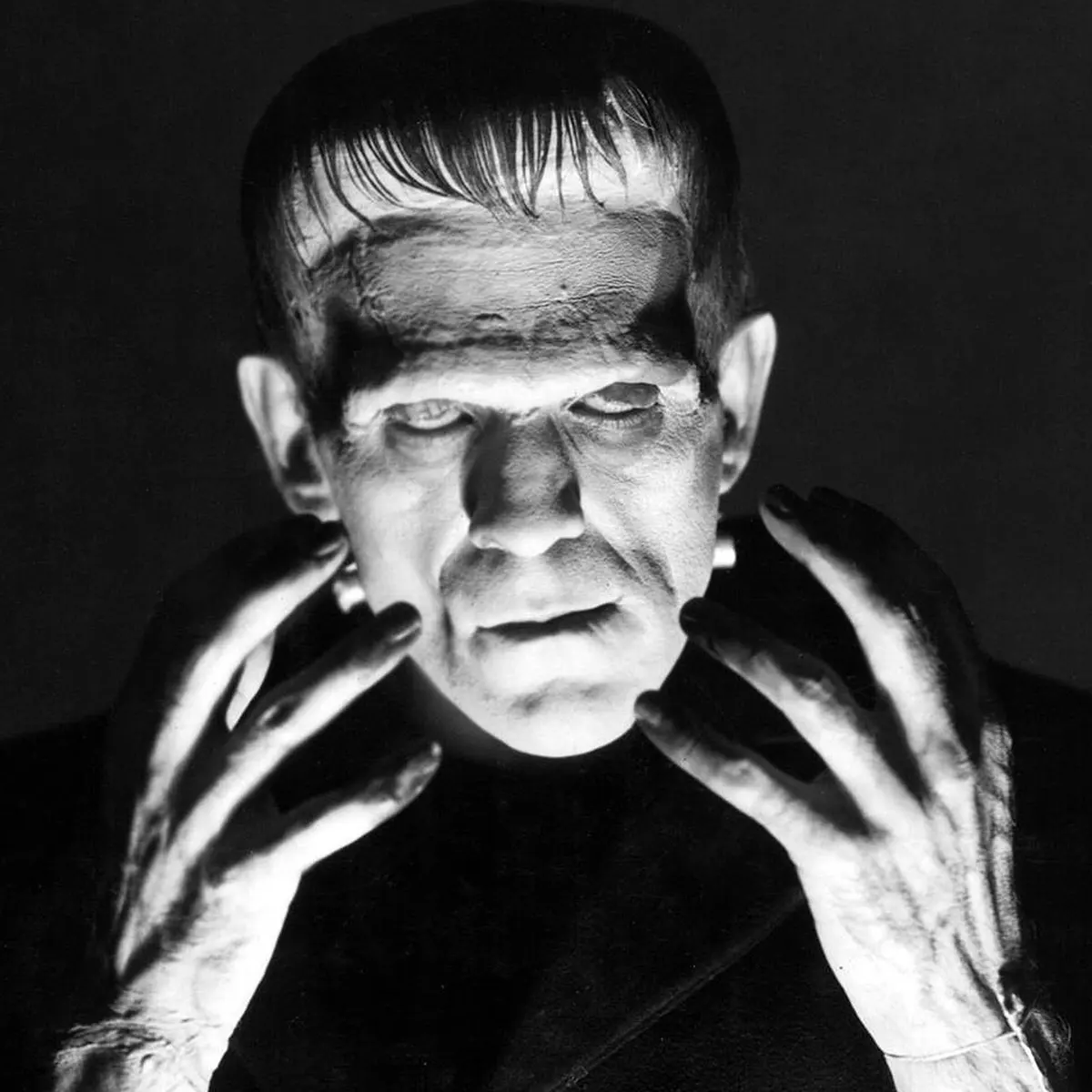
Frankenstein; or, The Modern Prometheus is an 1818 novel written by English author Mary Shelley. Frankenstein tells the story of Victor Frankenstein, a young scientist who creates a sapient creature in an unorthodox scientific experiment. Shelley started writing the story when she was 18, and the first edition was published anonymously in London on 1 January 1818, when she was 20. Her name first appeared in the second edition, which was published in Paris in 1821.
Shelley travelled through Europe in 1815, moving along the river Rhine in Germany, and stopping in Gernsheim, 17 kilometres (11 mi) away from Frankenstein Castle, where, two centuries before, an alchemist had engaged in experiments. She then journeyed to the region of Geneva, Switzerland, where much of the story takes place. Galvanism and occult ideas were topics of conversation for her companions, particularly for her lover and future husband Percy B. Shelley. In 1816 Mary, Percy and Lord Byron had a competition to see who could write the best horror story. After thinking for days, Shelley was inspired to write Frankenstein after imagining a scientist who created life and was horrified by what he had made.
Though Frankenstein is infused with elements of the Gothic novel and the Romantic movement, Brian Aldiss has argued for regarding it as the first true science-fiction story.
Solved questions bank of The Romantic period:

The Romantic Age: Click
here
Romantic Poets: Click here
Works of Romantic poets: Click here
Jane Austen and Walter Scott: Click here
Lord Byron: Click
here
Poems by Byron: Click here
other
works Byronic
hero
Shelley: Click
here
Poems by Shelley: click here
Keats: Click here
Poems by Keats: Click
here
Wordsworth: Click here
Some
facts
Poems by Wordsworth: Tintern
Abbey Ode
to Duty To
the Skylark Intimations
of Immortality To
a Daisy
Coleridge: Click
here
The
Rime of the Ancient Mariner
The
Rime of the Ancient Mariner
Lectures on Shakespeare: Click
here
Charles Lamb: Click here Essays
on Elia
De Quincey: Click here
Landor: Click here
Some works
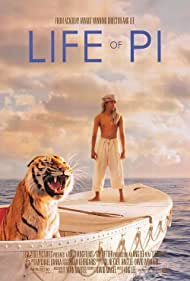
Life of Pi is a 2012 adventure-drama film directed and produced by Ang Lee and written by David Magee. Based on Yann Martel's 2001 novel of the same name, it stars Suraj Sharma, Irrfan Khan, Rafe Spall, Tabu and Adil Hussain in lead roles. The storyline revolves around two survivors of a shipwreck. One is a sixteen-year-old Indian boy named Pi Patel (Suraj Sharma) and the other is a ferocious Bengal tiger named Richard Parker that are on a lifeboat stranded in the Pacific Ocean for 227 days.
The film began development shortly after the release of the book and would see directors M. Night Shyamalan, Alfonso Cuarón and Jean-Pierre Jeunet involved at various stages before the hiring of Lee. Filming was split between India, Taiwan and Montreal in 2011, with Rhythm & Hues Studios (R&H) handling the visual effects work. The film had its worldwide premiere as the opening film of the 50th New York Film Festival at both the Walter Reade Theater and Alice Tully Hall in New York City on September 28, 2012. (Wikipedia)
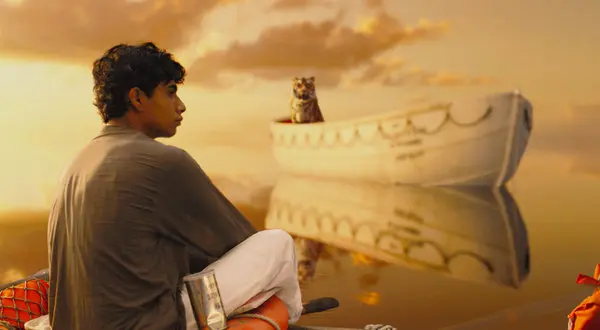
Film screening of Life of pi
– (Some notes)
Pre-viewing task:
While viewing task:
Post-viewing task:

This blog contains an overview of the Frantz Fanon’s most
important book The Wretched of the Earth (1961)

Here
I have embedded a PowerPoint presentation containing an explanation of the
text.

Recently watched a Zee5 web-series Mrs. And Mr. Shameem. I got attracted by the title as well as the trailer. For the first time, I read ‘Mrs’ first and ‘Mr’ afterward, was not aware that it was taken as an irony may be.

A Pakistani series, from the streets of Lahore, starring the megastar Saba Qamar, tells the love story of a man Shameem (Nauman Ijaz) who is ‘unfit’ in the definition of Macho man, or as society depicts ‘Mard’. Umaina (Saba) is a bold young girl, and in love with the man of her dreams, who impregnates her, and later betrays her. After facing all the hatred from society and her own family she ends up marrying his silent lover Shameem, who owns ‘Nazakat’ than the so-called ‘manly qualities’.
I am not going to tell the story, but the discussion starts from here. The series may look a bit slow with twenty episodes, each one with 40-50 minutes but gives a voice to some great issues and breaks the stereotypes.


2) Motherhood: Motherhood is always seen as a boon to a
woman. But the series shows that Umaina hates her infant and tries to kill him
many times. This concept is applied in the story quite logically as she was
suffering from postpartum depression which is also called baby blues. In this
depression, a mother feels disgusted about the child and sometimes can kill the
child too. This can be proved as something new to watch than the stereotypical
image of a perfect mother who is always ready to sacrifice everything for the
child.
The next character who falls in the category is, Shameem’s
sister, she was eagerly craving to be a mother and was being criticized a lot
by her husband as well as society. She passed half of her life in regret that
she is unable to produce a child and also got involved with black magic but,
later she came to know that the fault was in her husband. She broke the
shackles of society and started hoping for a better life with Shameem and
Umaina’s child Ali. Later on, her husband joined the hijra community and
never returned to her. This can be a dramatic end, but the issue that the
series raise is that women are still being judged if she doesn’t provide a
child within two-three years of their marriage.
3) Child abuse: There are two incidents of child abuse.
First is the daughter of Shameem’s sister, who is being molested by the Maulana
and then turned into a rebel. The second is the employ of Shameem, Toni,
who was raped by his uncle in childhood and turned out a gay and also a patient
of HIV. This reflects the major issue of child harassment with the traumas of
childhood. By putting Maulana as a molester, the series has successfully
entered into some dark corners of the world of religion.
4) HIV patients: The last important issue is the
treatment of HIV-positive people and the hidden sympathy of some noble people
regarding them. Both Shameem and Umaina got an infection of the disease from
Toni, as they were deeply in connection with him. Umaina has also lost her
second child, a baby girl due to this disease and ill-treatment.

After a long time, I have got inspired to write something about a web-series is because of its ‘men-centric’ approach and its connection with the LGBT community. As one can never call Shameem a transgender or gay, the series has a hidden slight reflection on the feminine hormones in males and can be called androgynous too (not in all sense – just for understanding). Shameem’s character makes him fall under a ‘Bechara’ as one of the victims. But he wins our hearts.


Here I’m sharing my favorite fragment from it: